Have You Ever Felt…
…like reality itself is being edited?
…like the version of life you’re shown online feels smoother, brighter and somehow untrue?
…like someone, somewhere, is watching, judging what is real and what deserves to exist?
…like truth, once taken too far, can become something violent?
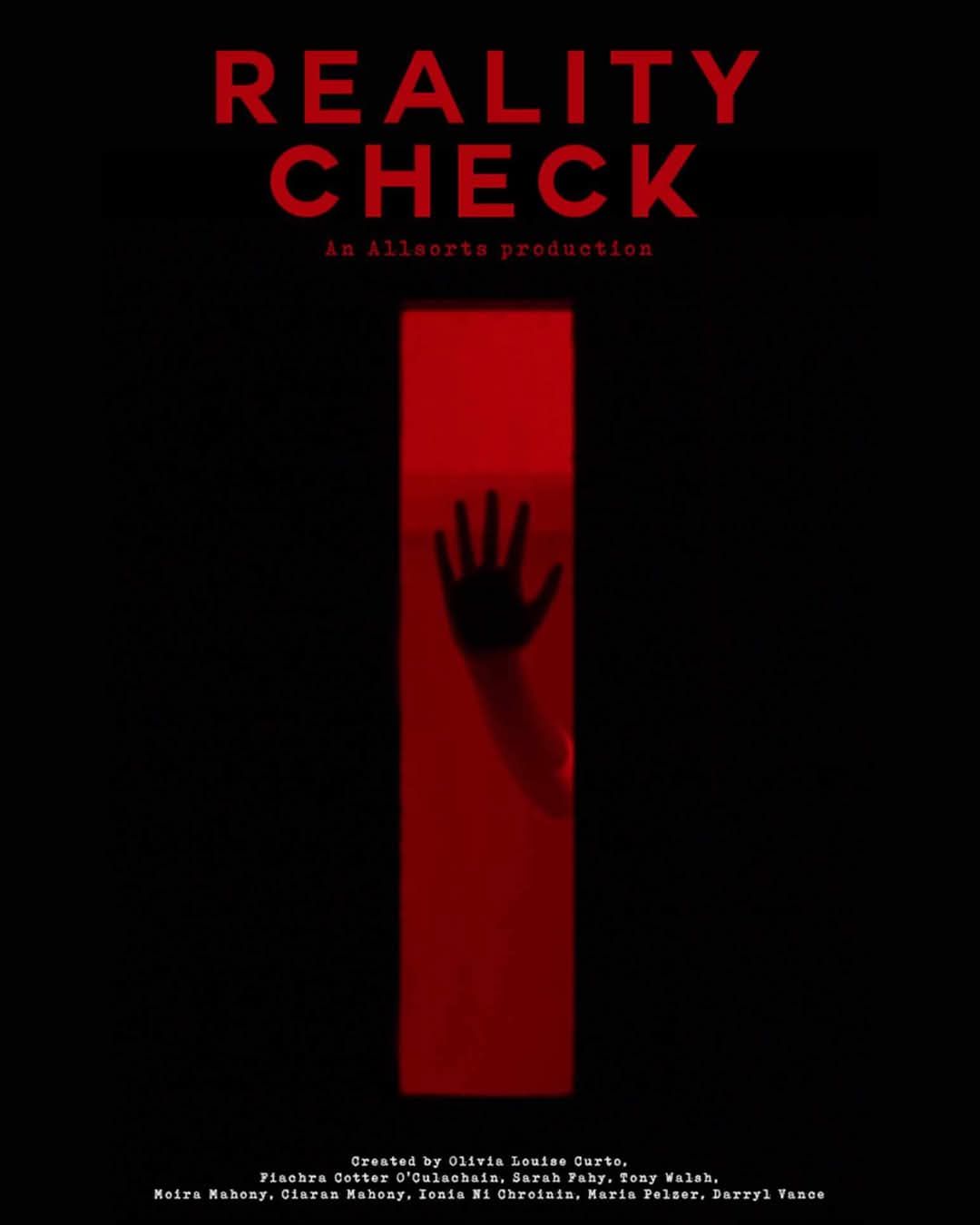
Reality Check is a chilling horror short that confronts the danger of obsession, not with fame, but with truth.
Reality Check asks a quiet but unsettling question:
Who decides what is real and what happens when that decision becomes absolute?
SYNOPSIS
Reality Check is a psychological horror short film that follows a young social-media influencer who is abducted and held inside an abandoned primary school by a former teacher obsessed with the idea of truth.
Convinced that social media represents a fabricated reality he cannot tolerate, the teacher projects his moral fixation onto her, turning the school into a closed arena where education, authority, and control become distorted tools of violence. As he begins to hunt her through classrooms and corridors, the space itself transforms into a symbolic battleground between constructed identity and obsessive ideology.
The film unfolds as a tense pursuit in which the influencer must navigate both the physical threat and the logic of her captor, a man who believes that eliminating what he perceives as false is an act of necessary correction.
Reality Check explores the collision between appearance and belief, questioning how far the need for “truth” can go before it becomes something far more dangerous.
BEHIND THE FILM
Reality Check was created within the constraints of the 48 Hour Film Challenge, a format that compresses the entire filmmaking process into just two days.
At the start of the challenge, teams are given no script and no preparation time. Instead, they receive a set of mandatory elements on the same day: a genre, a theme, a specific prop that must be used meaningfully, a required line of dialogue, and a prescribed camera movement. From that moment on, everything must be created from scratch. The story is written, the film is shot, edited, and delivered all within 48 hours.
At first glance, Reality Check presents a simple narrative. A single location. A limited number of characters. A chase that unfolds over just a few minutes of screen time. But that apparent simplicity is the result of deliberate reduction.
With only five minutes to tell the story, every choice had to be intentional.
Directing under these conditions meant working with extreme clarity: defining the emotional trajectory early, establishing power dynamics through blocking rather than dialogue, and using space as a narrative tool. The school setting was not treated as a backdrop, but as an active presence, corridors, classrooms, and thresholds becoming part of the tension.
From a cinematography perspective, the challenge demanded precision over experimentation. Camera movement, framing, and rhythm were carefully planned to support the psychological state of the characters, even when time pressure allowed little margin for error. Light, composition, and perspective were used to guide the viewer’s attention and sustain unease without relying on excess.
What the 48-hour format removes is comfort. What it reveals is instinct.
Reality Check is the result of stripping a story down to its core and trusting visual language to carry meaning. It’s a reminder that even the shortest films — especially the shortest films — are built on countless decisions that never appear on screen, but shape everything the audience feels.